In brief

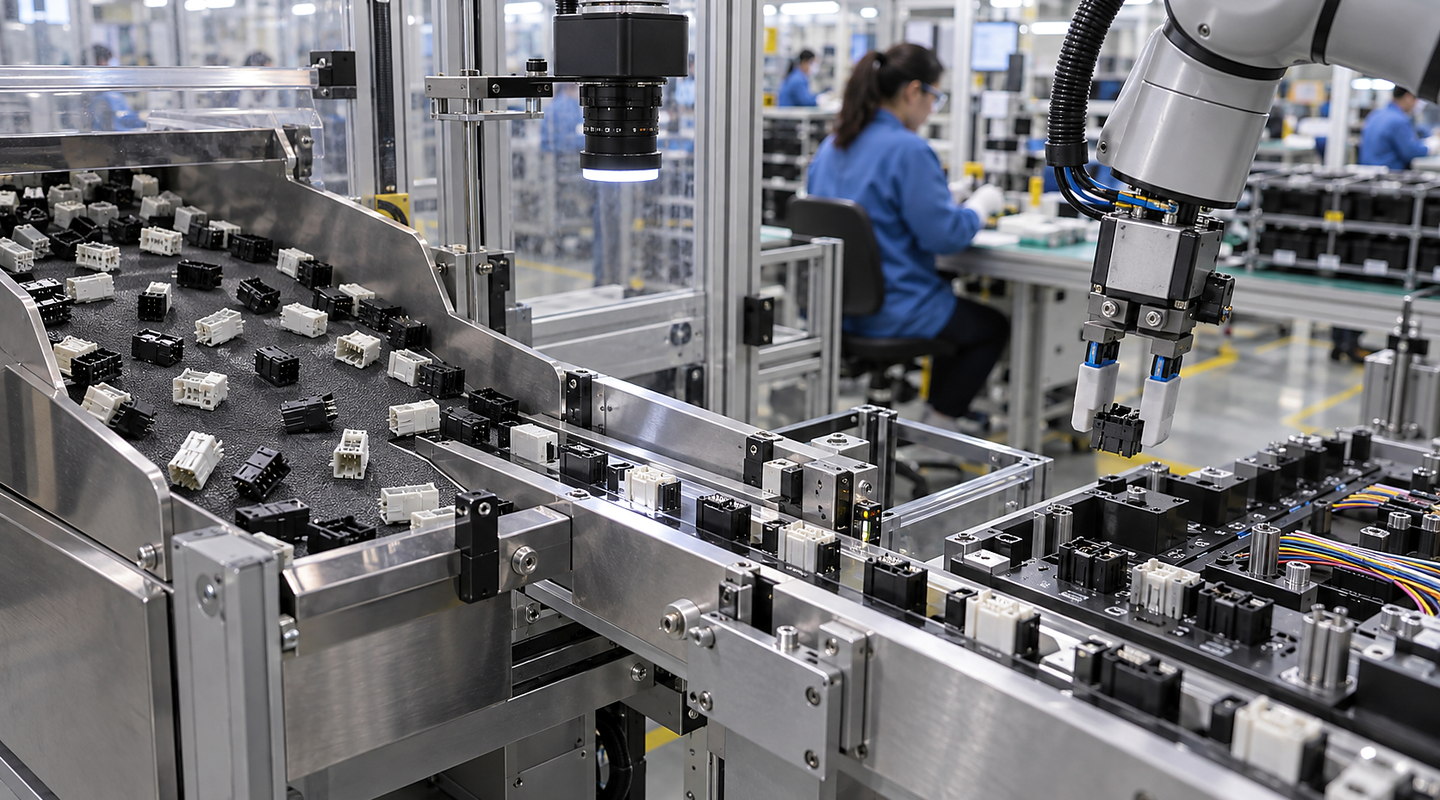
Assess loose electrical contacts in their actual delivered bulk condition. Fine features can interlock and folded or hollow forms can nest, so include difficult examples and normal replenishment in the trial. Check separation, track travel and final release for correct insertion pose and damage, then judge usable delivery at the assembly station.

Follow the contact-feeding trial sequence and receiving-station handover checks. Confirm whether the product is supplied loose, in trays or on a carrier strip; a loose-parts assessment does not establish suitability for a contact intended to stay strip-fed until insertion.

On the production floor

Plan for the conditions your team handles every day — Electrical Contact Feeders

Plan electrical contact feeders around real component variation, bulk condition, orientation, usable delivery rate and the downstream interface. Discuss representative part trials with Sorting Solutions. For bulk presentation using electrical-contact orientation and feeding, the deciding details include component geometry and variation for electrical-contact orientation & feeding, bulk condition and replenishment method and jam, damage and recovery acceptance checks.

Discuss your application
Your application

Details worth resolving early for bulk presentation using electrical-contact orientation and feeding

Question 1

Component Geometry and Variation for Electrical-Contact Orientation & Feeding

Provide normal, marginal and supplier-variant contacts with identified batches. Mark the mating face, spring feature, locking lance and plated areas and the geometry that establishes orientation at the assembly-tool datum.

Question 2

Surface, Fragility and Entanglement Behaviour

Distinguish permitted supporting/guide surfaces from protected areas and agree acceptable cosmetic marks versus deformation. Include nested and interlocked contacts and inspect the condition after separation, track travel and release.

Question 3

Bulk Condition and Replenishment Method

Confirm loose, tray or carrier-strip delivery. Supply representative packaging and bulk samples, including residual handling material where applicable. Trial normal replenishment and the smallest intended batch while preserving variant and sample identity.

Question 4

Required Orientation and Delivery Rate

Define leading end, upper face and rotation at the receiving nest. Measure contacts available for insertion in that pose, including interruptions and recovery, rather than comparing nominal feeder cycles alone.

Question 5

Escapement and Downstream Pick Interface

Agree release position, permitted movement, delicate-feature support and part-present confirmation with the assembly integrator. Challenge absent/double parts and a downstream machine that pauses unexpectedly.

Question 6

Jam, Damage and Recovery Acceptance Checks

Compare incoming and fed samples using the agreed inspection method. Keep correct orientation, damaged features, mixed variants, missed deliveries, interventions and recovery events separate; retain any electrical or functional testing as a distinct responsibility.

Your operating cycle

Plan for more than automatic running

Include replenishment, normal production, planned change, short stops, fault recovery, cleaning and maintenance for bulk presentation using electrical-contact orientation and feeding. A fast automatic step can still leave your team with a slow or awkward overall process.

Prove the result

Test bulk presentation using electrical-contact orientation and feeding against representative components and difficult bulk-presentation conditions

Normal production

Use identified representative contact batches, normal replenishment and the smallest intended batch. Assess correctly oriented, undamaged contacts available at the insertion point with interventions and part condition retained in the record.

Difficult conditions

Include nested/interlocked pairs, marginal and supplier-variant contacts and the actual protected features and surfaces. Review inverted or similar wrong variants and retain unresolved separate-check requirements.

Fault and recovery

Challenge absent and double parts and a downstream station that stops unexpectedly. Agree the response and recovery, then inspect the first accepted contact at the receiving pose and record missed delivery or damage separately.

Important limits

Be clear about what the trial has shown

Compare with Flexible or Metered Delivery Involving Electrical-Contact Orientation and Feeding if that operating pattern is closer to your application.